
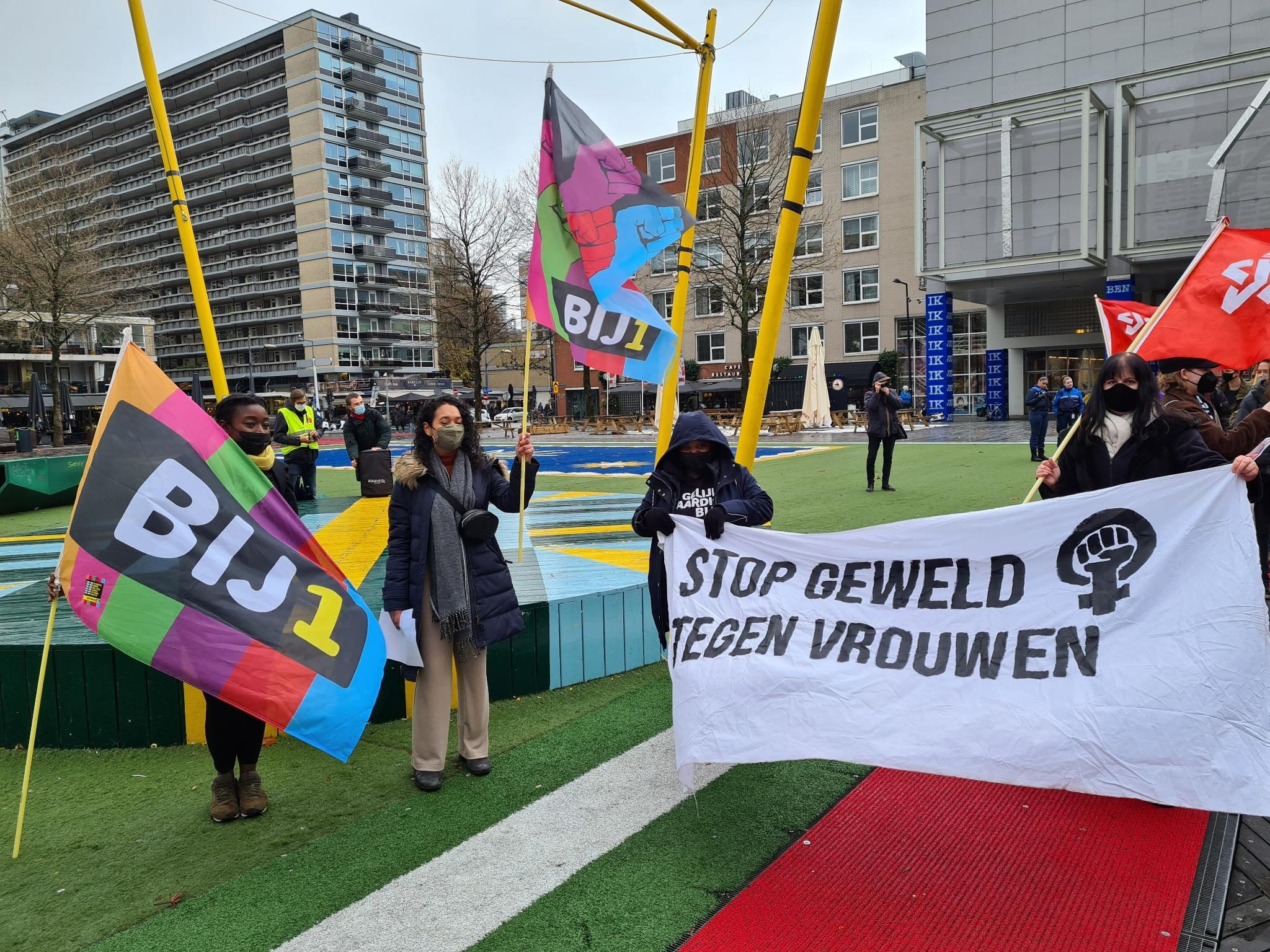
The tragic murders of two young women last week are examples of a longer list of femicide that has rocked Rotterdam in recent years. BIJ1 sympathizes with the families and relatives of the victims and calls for more effective policies aimed at combating all forms of gender-based violence. The spiral of violence must be broken.
In view of the current situation, we ask the following questions:
- Do the most recent cases of femicide trigger the deployment of new initiatives and measures regarding gender-based violence? If so, what measures and initiatives are involved? If not, why?
- Do the most recent cases of femicide prompt additional deployment of current initiatives and measures on gender-based violence? If so, what measures and initiatives are involved? And how is this extra used? If not, why?
- In the case of the most recent femicide cases, were there any known signs of past violence to the police or social workers? If so, why was no action taken in time? If not, why?
Following the murders of three young women in 2018, the 'Stop violence against women' working group was established. This working group advises the municipality on tackling gender-based violence. Is this group still active? If not, why? If not, are the responsible aldermen prepared to reinstall the working group? If not, what are the reasons given for this?
- Have the recommendations of the working group led to an integrated approach to gender-based violence? If so, what are the main features of this approach and how much time does it take? If not, why?
- The recommendations of the working group were published in 2018 in the manifesto Stop violence against women. In this document there is a strong emphasis on making the voice of victims audible, as well as on the safety and reception of victims. With this document, aldermen, municipal political parties and social organizations commit themselves to commitments.
- BIJ1 is curious about the progress that has been made and asks the following questions:
- Are the responsible aldermen prepared to provide insight into the progress made with regard to the willingness to report gender-based violence? If so, what new initiatives and measures are being considered? If not, why?
- Are the responsible aldermen prepared to provide insight into the progress made with regard to the possibilities of reporting gender-based violence? If so, what new initiatives and measures are being considered? If not, why?
- Are the responsible aldermen prepared to provide insight into the progress made regarding the sensitivity of police officers when reporting gender-based violence? If so, what new initiatives and measures are being considered? If not, why?
- Are the responsible aldermen prepared to provide insight into the progress made with regard to the willingness of police officers to act in the event of gender-based violence? If so, what new initiatives and measures are being considered? If not, why?
- Are the responsible aldermen prepared to provide insight into the progress made with regard to the possibilities for safe reception of victims in the event of gender-based violence? If so, what new initiatives and measures are being considered? If not, why?
Furthermore, BIJ1 notices a lack of attention for the safety of trans and queer women and non-binary people. To this end, we ask the following questions:
- Are the responsible councilors aware of the fact that trans and queer women as well as non-binary people are disproportionately victims of gender-based violence? If so, what policy has this knowledge led to? If not, why is this knowledge lacking?
- Are the responsible councilors willing to invest extra in the safety of trans and queer women as well as non-binary people? If so, what initiatives and measures are being considered? If not, why?
- BIJ1 also lacks structural attention for important initiatives and measures regarding the causes of gender-based violence. To this end, we ask the following questions:
- Are the responsible aldermen prepared to explain why the causal role of male perpetrators regarding gender-based violence remains underexposed in current policy? If so, what are the reasons for this? If not, why?
- Are the responsible aldermen prepared to invest extra in combating the structural causes of gender-based violence, such as stereotypical views on gender expression and male/female relations? If so, what initiatives and measures are being considered? If not, why?
- Are the responsible aldermen prepared to invest extra in combating structural causes of gender-based violence, such as stereotypical views on gender expression and male/female relations, within the ranks of the Rotterdam Police? If so, what initiatives and measures are being considered? If not, why?